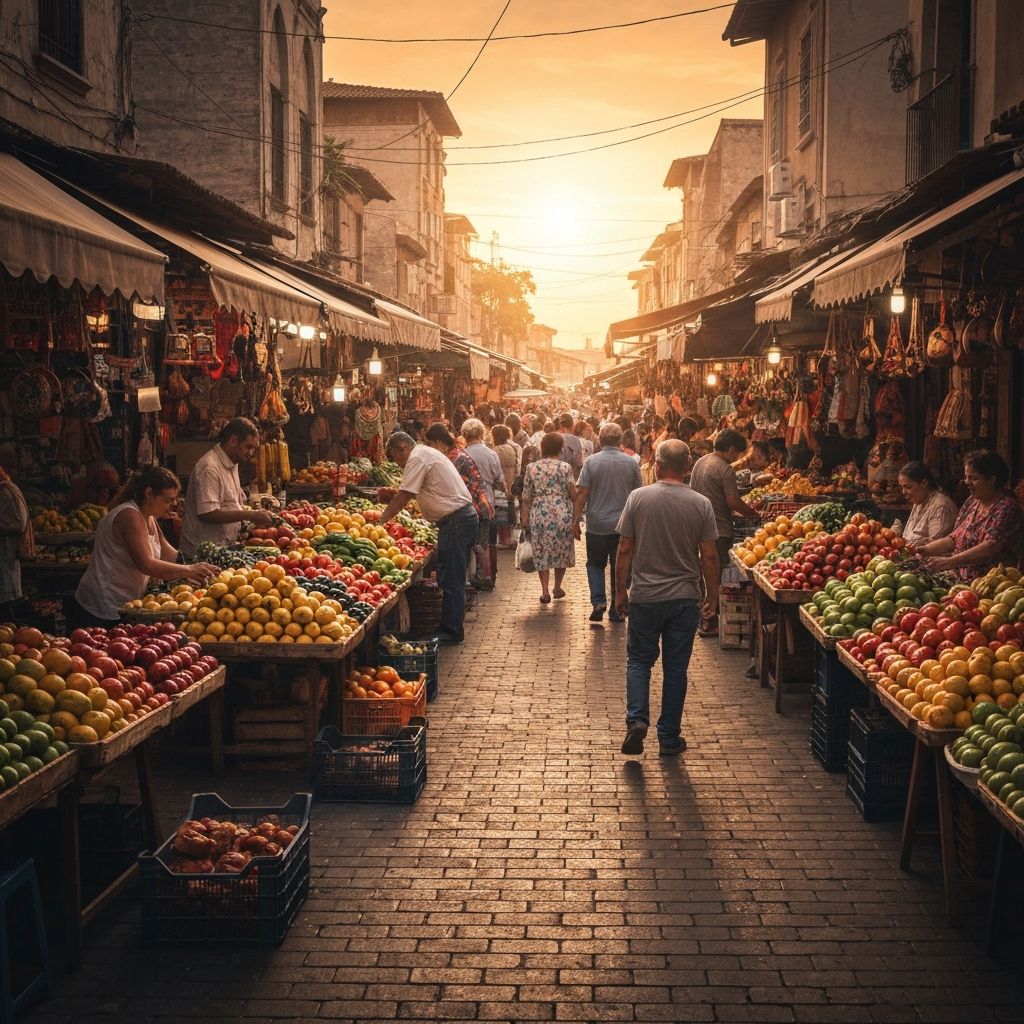
Understanding Seasonal Foods
Seasonal produce refers to fruits and vegetables that are harvested at their natural peak during a particular time of year in a given region. The concept of seasonal eating is grounded in the observation that foods consumed closer to their point of harvest tend to retain more of their original nutrient profile, as certain vitamins — particularly Vitamin C and folate — can degrade during extended storage and transportation.
In agricultural regions such as the coastal and Andean zones of Peru, a wide variety of produce is available across different seasons, including native varieties of potatoes, maize, quinoa, and an extensive range of fruits. Understanding which foods are in season locally is one way to contextualize the concept of variety and freshness in a general nutritional framework.
This is not a directive to eat exclusively seasonal foods, but rather a context for understanding the relationship between harvest timing, storage duration, and nutrient retention as described in nutritional science literature.
Fresh vs. Processed Foods: Key Distinctions
Understanding the general differences between whole, minimally processed, and highly processed foods provides useful context for interpreting nutritional information. The following matrix outlines key characteristics across these categories.
| Characteristic | Whole / Unprocessed | Minimally Processed | Highly Processed |
|---|---|---|---|
| Nutrient Retention | Generally high; nutrients present as naturally occurring | Varies; some nutrients may be reduced by preparation | Often lower; many micronutrients reduced or absent |
| Fiber Content | Present in natural form (bran, skin, pulp) | Partially retained depending on process | Often removed during refining processes |
| Added Substances | None | May include salt, oil, or simple preservation agents | Commonly includes added sugars, sodium, preservatives, colorings |
| Water Content | Naturally high in fruits and vegetables | May be reduced through drying or cooking | Often low; energy density tends to be higher |
| Examples | Fresh apple, raw quinoa, whole fish | Frozen vegetables, natural yogurt, roasted nuts | Packaged snacks, instant noodles, soft drinks |
This matrix is a simplified overview for educational context. Food processing exists on a continuum, and individual products vary considerably within each category.
Understanding Different Food Preparation Methods
Food preparation encompasses the range of methods by which raw ingredients are transformed prior to consumption. Each method interacts differently with the food's structural components, affecting texture, flavor, and — relevantly for this resource — nutrient availability.
The purpose of this section is to describe the general principles at work in different preparation contexts, not to prescribe particular cooking approaches.
Steaming involves cooking food using water vapor without direct immersion in water. Because water-soluble vitamins (particularly Vitamin C and B vitamins) leach into cooking water during boiling, steaming generally results in better retention of these nutrients. The lower temperature of steam cooking compared to dry heat methods also reduces heat-induced degradation.
Boiling involves submerging food in water at or near 100°C. While effective for cooking starchy foods such as grains and legumes, this method results in notable leaching of water-soluble vitamins into the cooking liquid. Simmering at lower temperatures reduces some heat-related degradation. Where the cooking liquid is consumed (e.g., in soups or stews), some leached nutrients remain accessible.
Dry heat methods such as roasting and baking apply high temperatures without water as a medium. These methods can enhance flavor and palatability through caramelization and Maillard reactions, but also result in the degradation of heat-sensitive vitamins. The impact varies significantly by temperature, duration, and the food being prepared. Root vegetables and legumes, for example, retain substantial nutritional content after roasting.
Consuming foods without heat treatment preserves heat-sensitive compounds, including Vitamin C and certain enzymes. However, raw preparation is not uniformly superior in nutritional terms. Some nutrients become more bioavailable after cooking — for example, the lycopene in tomatoes and the beta-carotene in carrots. The relationship between preparation and nutrient availability is food-specific rather than governed by a single rule.
Understanding Portion Size as a Concept
Portion size refers to the quantity of food consumed at a single eating occasion. As an educational concept, it is relevant to understanding how the same food can have different nutritional implications depending on the amount consumed. The concept of portion size is distinct from the idea of a "serving size," which is a standardized unit used for labeling and reference purposes.
Understanding portion size as a concept is one component of nutritional awareness. It does not imply that there is a single correct portion for any food or person. Individual requirements vary significantly based on body size, physical activity, age, and metabolic factors.
- Energy density varies across food categories — fats provide more energy per gram than carbohydrates or proteins.
- Volume and weight are not equivalent measures of nutritional content — a small handful of nuts differs considerably from the same volume of raw leafy greens.
- Water content in food contributes to its overall weight and volume without contributing energy.
- Fiber content influences how quickly food is digested and how it interacts with digestion rates.
Home Preparation vs. Pre-Prepared Foods: A Contextual Overview
The distinction between foods prepared at home from whole ingredients and pre-prepared or commercially produced food products is relevant from a nutritional perspective because of the differences in ingredient composition and preparation control. When food is prepared from whole ingredients, the person preparing it has direct knowledge of and control over what is included.
Pre-prepared foods vary enormously in quality, ingredient composition, and nutritional profile. Some minimally processed convenience products (such as plain frozen vegetables or canned legumes without added sodium) differ little in nutritional profile from their fresh equivalents. Highly processed products, by contrast, typically involve considerable reformulation that affects nutritional composition.
This distinction is presented here as context for understanding nutritional concepts — not as guidance to adopt or avoid any particular food preparation approach. Accessibility, cultural context, time, and economic factors all influence how and what people eat, and these considerations are beyond the scope of this informational resource.